Cue:
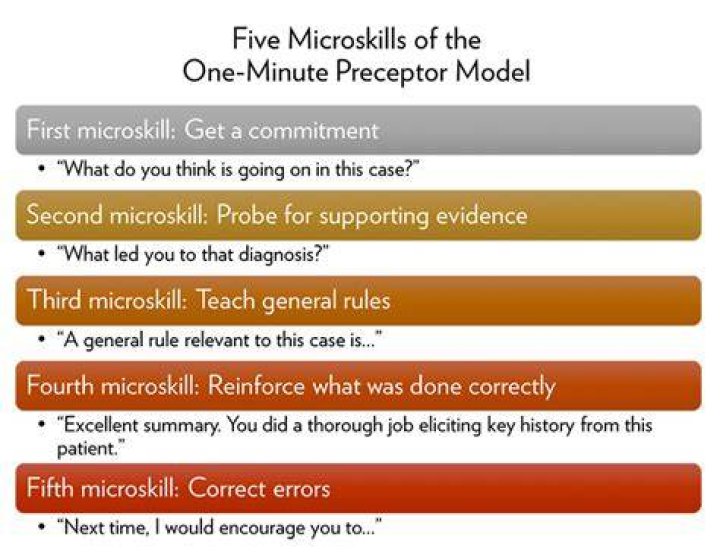
After presenting the facts of a case to you, the learner either stops to wait for your response or asks your guidance on how to proceed. In either case, the learner does not offer an opinion on the data presented. If you recognize the patient's problem, your immediate response is to want to tell the learner the answer.
Preceptor Response:
Instead, you ask the learner to state what she/he thinks about the issue presented by the data. Issues may include coming up with more data, proposing a hypothesis or plan, developing a management plan, figuring out why the patient is noncompliant, deciding on whom to consult, etc.
Rationale:
Asking learners how they interpret the data is the first step in diagnosing their learning needs. Without adequate information on the learner's knowledge, teaching might be misdirected and unhelpful. When encouraged to offer their suggestions, learners not only feel more of the responsibility for patient care but enjoy a more collaborative role in the resolution of the problem.
Examples
"What do you think is going on with this patient?"
"What other information do you feel is needed?"
"What would you like to accomplish in this visit?"
"Why do you think the patient has been non-compliant?"
Non-Examples
It is not offering your own opinion.
"This is obviously a case of pneumonia."
It is not asking for more data nor is it Socratically leading them to the right answer.
"Anything else?"
"Did you find out which symptom came first?"